Soil compaction is a problematic issue that impacts gardens and grass surfaces used for many purposes. For example, how often have you seen a waterlogged goal mouth on a football pitch or a flooded putting green on a golf course? These are usually caused when soil particles are pressed together, reducing the pore spaces between them. This process frequently happens quickly and quietly beneath the surface, making it difficult to notice until the damage is significant. Soil compaction can be caused in several ways, including heavy foot traffic, machinery, or even water weight after a storm. Without appropriate action, like utilising an aeration device, densely packed soil results in decreased water penetration, oxygen levels, and nutrient absorption by plant roots.

Soil Compaction Hinders Growth
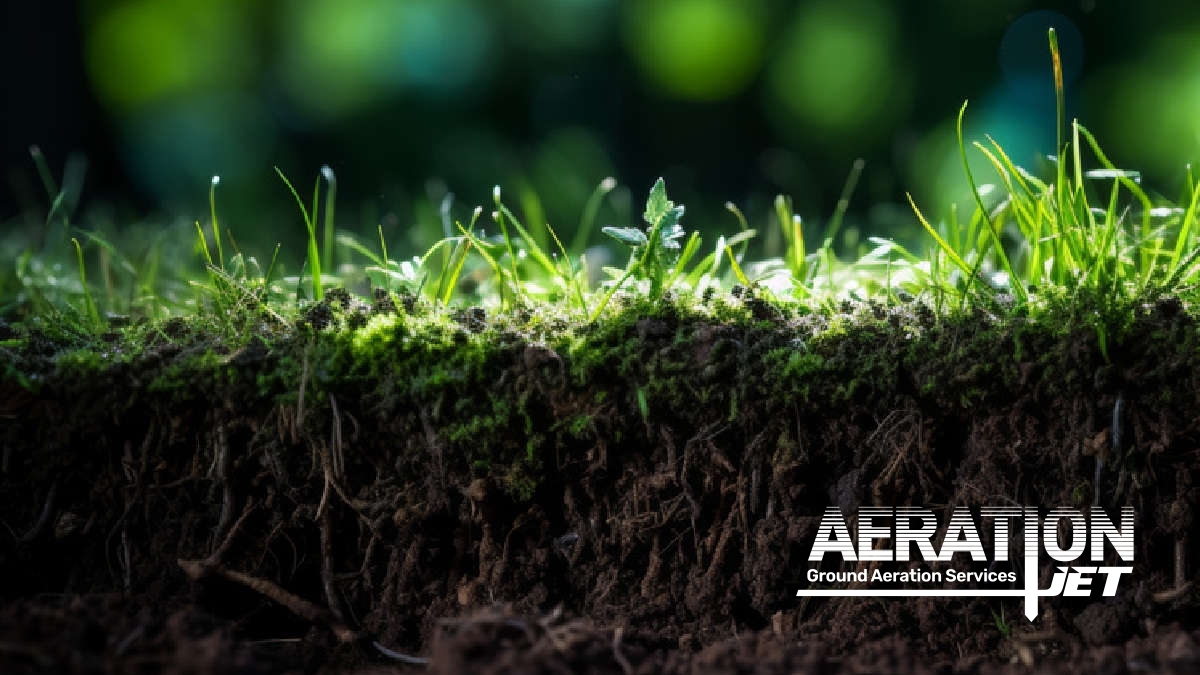
Compacted soil hinders plant growth by restricting root development and access to essential nutrients. When roots can’t expand or absorb the necessary minerals and water, the vitality of the plants starts to diminish. Over time, compacted soil can lead to complete ecosystem degradation, causing grass, crops, and other vegetation to die off. Such damage can be frustrating and costly for those managing lawns and for people managing orchards and vineyards.
Find out more about the aeration of vineyards and orchards and how Aeration Jet effectively removes soil compaction to increase crop yields.
The Role of Waterlogging in Soil Compaction
One of the leading causes of soil compaction is waterlogging, which occurs when soil becomes oversaturated with water. This can happen after prolonged periods of rainfall or due to poor drainage in certain areas. When excess water remains trapped in the soil, it fills the tiny air pockets necessary for oxygen exchange and root growth, creating an environment too dense for plants to thrive. Over time, the soil becomes more compacted, worsening the problem and making it even harder for roots to penetrate the earth.
Waterlogged soil can harm plant roots and disturb the ecosystem of the soil. In such anaerobic conditions, beneficial microorganisms, essential for healthy soil structure and plant growth, are difficult to survive. Without these microbes, soil fertility decreases, and plant health deteriorates. If left unresolved, waterlogging and soil compaction can have long-term negative impacts on the overall productivity of the land. For example, soil aeration is critical in agricultural settings such as vineyards. Properly aerated soil allows the vines’ roots to breathe, absorb nutrients, and maintain moisture levels, ultimately leading to a healthier crop. This is crucial in producing high-quality grapes that result in wines with more complex flavours, enhancing the vineyard’s vineyards sustainability and reputation.
The Environmental Impact of Soil Compaction
Soil compaction harms plants and can lead to severe problems like erosion, increased runoff, and poor water quality. When soil is too compacted, water can’t quickly soak into the ground, so it runs off the surface during rainstorms. This runoff can wash away nutrient-rich topsoil and even carry pollutants into nearby streams or lakes. Over time, severe erosion can damage the entire landscape, impacting plants, animals, and soil health. Moreover, compacted soil struggles to absorb carbon from the atmosphere, which can contribute to climate change in the long run.
Land that suffers from soil compaction also becomes less resilient to extreme weather events. Droughts, heavy rains, and high winds can all exacerbate the damage to compacted land. Compacted soil can accelerate the destruction in areas prone to flooding, as water fails to infiltrate the ground and pools at the surface. This can drown plant roots, suffocate beneficial organisms, and leave barren, unproductive land behind. Landowners need to stay proactive in addressing soil compaction, especially in regions where climate conditions are unpredictable.
How to Test Compacted Soil using a Penetrometer
Identifying the level of soil compaction is the first step toward addressing the issue. One effective way to diagnose the severity of soil compaction is by using a penetrometer, a specialised tool that measures soil density and water distribution at various depths. By inserting the penetrometer into the ground, we can detect the soil and determine whether the soil layers have been affected by waterlogging or other forms of compression. Our team uses state-of-the-art penetrometers to assess the soil’s condition and gather detailed data, which informs the best course of action for decompaction. At Aeration Jet, we regularly test areas before and after use to show the percentage of soil decompaction we achieved using our aeration machine.
By loosening the compacted layers using Aeration Jet, we help restore the soil’s natural structure, enabling its plant roots to grow freely and absorb the essential resources they need to thrive. This process is critical in high-traffic areas like gardens, farms, and sports fields, where soil compaction frequently occurs.
Benefits of Reducing Compacted Soil
Benefits for the environment and business comprise:
- Improved efficiency in establishing crops and absorbing nitrogen
- Increased crop yields
- Reduced likelihood of soil damage from machinery and animals
- Enhanced ability to withstand floods and droughts
- Improved quality of drinking and bathing water due to decreased runoff and erosion
- Reduced presence of ammonia in the air, as compacted ground emits more gas from nitrogen fertilisers and organic manures
- Lower levels of greenhouse gas emissions
Dealing with Soil Compaction: Aeration and Decompaction
The key to reversing soil compaction lies in proper soil aeration and decompaction. Aeration creates small holes in the soil, allowing air, water, and nutrients to reach deeper layers. This encourages root growth and restores the soil’s oxygen and water balance. Regular aeration is essential to maintaining healthy soil for agricultural fields, lawns, and gardens, particularly after heavy rainfall or significant foot traffic. For areas like vineyards, aeration ensures that the roots of plants such as grapevines have ample space to grow, absorb moisture, and take in vital nutrients.
Our Aeration Jet soil decompaction machine uses aeration to ensure the soil regains its natural, healthy structure. By carefully removing excess water and breaking up compacted layers, we return the soil to a more porous and breathable state. This benefits plant health and improves the soil’s ability to retain moisture, reducing the risk of future compaction and waterlogging. Healthy, aerated soil creates a thriving plant environment, encouraging robust growth, better yields, and a more vital ecosystem overall.

Restoring Your Land with Professional Soil Decompaction
Soil compaction might seem inevitable in land management, but it doesn’t have to be a permanent issue. With the proper testing, tools, and techniques, soil can be restored to its original, fertile condition. Our experts at Aeration Jet have developed an aeration machine that has been proven to solve compacted soil issues. Whether you manage a tiny garden or a sizeable agricultural plot, addressing soil compaction will result in healthier plants, stronger root systems, and a more sustainable environment.
Soil Decompaction that works: Aeration Jet
The Aeration Jet Ground Aerator has been created to address deep soil compaction in sports fields, pastures, vineyards, and farmland. It employs a hydraulic probe to infuse the soil with high-pressure air, effectively loosening compacted layers and improving root and water penetration.
The equipment is adaptable and includes depth adjustment capabilities, making it a flexible solution for various soil types and conditions.
Contact us today to enquire about purchasing one of our state-of-the-art aeration machines or to book our ground aeration service.