
Golf Course Aeration Improves Turf Health and Playability
Golf course aeration can greatly enhance the quality of fairways and putting greens by reducing soil compaction and water logging.
The UK is home to over 2,500 golf courses, around 150 of which are in East Anglia, where our company is currently most prevalent.
Golf courses provide community and sports access to many across the country and with our aeration machine we ensure that greens and fairways are kept open by removing water logging and soil compaction.
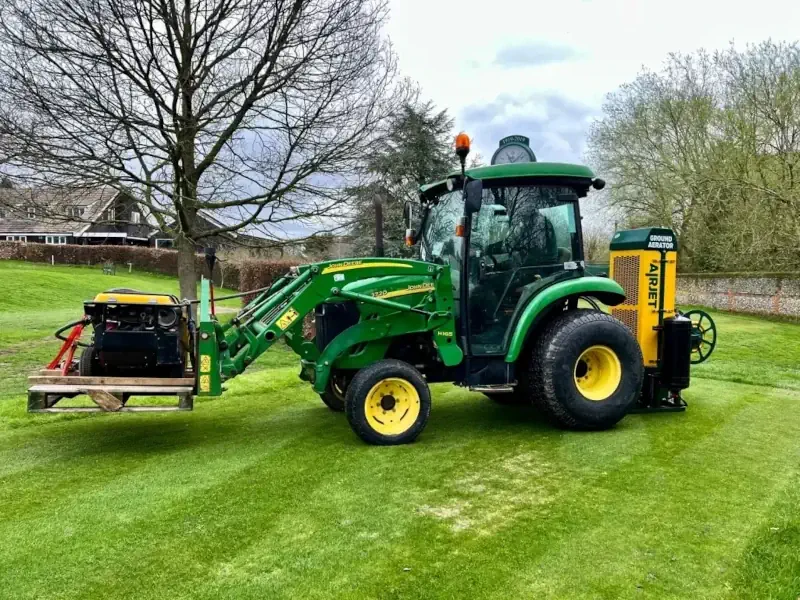
The video shows an Aeration Jet in Action on a golf course putting green. Watch as the surface lifts due to the aeration blasts, which de-compact the soil and allow drainage and increased oxygen into the root system.

Relieving Soil Compaction with Golf Course Aeration
Soil compaction is a major issue on golf courses, thanks to constant foot traffic, heavy golf carts, and maintenance equipment. When the soil becomes too compacted, it restricts the grass roots from growing deeply and makes it harder for oxygen to reach the soil. Aeration helps relieve this compaction by punching small holes in the ground, allowing the soil to loosen up and breathe which encourages roots to grow deeper and stronger, leading to healthier, more durable turf for our players.
Reducing soil compaction also helps the turf handle the stress of daily play more effectively. Grass with deeper roots can recover quicker from overuse, providing a more consistent playing surface for golfers. For course managers and greenkeepers, regular aeration is a smart strategy to keep the turf healthy and avoid costly issues like thinning grass or bare spots that need repair.
Golf Course Aeration: Sustainability and Nutrient Absorption
Water and nutrients are essential for keeping golf course turf lush and green, but compacted soil can block them from reaching the roots where they’re needed most. Aeration helps solve this problem by creating channels in the soil, which allows water and nutrients to seep down to the root zone more effectively. This means the grass can absorb what it needs to thrive, resulting in a healthier and more vibrant course. By improving absorption, aeration also helps make irrigation and fertilization efforts more efficient and cost-effective overall.
In addition to better nutrient preservation, aeration strengthens the grass by promoting deeper root systems. When grass has stronger roots, it can handle droughts and stressful conditions more effectively, reducing the need for constant watering. Largely, aeration helps ensure the turf stays healthy and resilient, no matter what the weather will throw at it.

Enhancing Drainage within Golfing Turf
Good drainage is key to keeping a golf course in top shape, especially after days of rough rainfall. Without proper drainage, water can pool on the surface, leading to muddy areas and potentially damaging the turf. Aeration helps enhance drainage by breaking up compacted soil and creating pathways for water to flow through more efficiently. This means fewer puddles, faster drying times, and a course that stays playable even after a storm.
Improved drainage through aeration also helps prevent problems like standing water, which can attract pests and promote turf diseases. By keeping the soil structure in good condition, aeration not only makes the course more resilient but also reduces the risk of costly damage. Regular aeration is a crucial part of maintaining a course that’s ready for play in all weather conditions.

Improving Turf Health and Appearance on Golf Courses
The look and feel of the turf are vital for any golf course, and aeration plays a significant role in both. By helping air, water, and nutrients reach the grass roots, aeration encourages the growth of strong, healthy grass. The result is a more vibrant turf that looks fantastic and performs well under the stress of regular play. A green, well-maintained course not only enhances the golfer’s experience but also reflects positively on the course’s overall reputation.
Beyond aesthetics, healthy turf is more durable and can bounce back quickly from the daily wear and tear that comes with constant use. Aeration ensures that the grass remains thick and resilient, minimising the risk of bare spots and ensuring a smooth, consistent playing surface. For golf greenkeepers, investing in regular aeration means investing in the long-term health and beauty of the course, keeping it in peak condition for years to come.
Aeration Jet: Our Part in Maintaining Golf Course
At Aeration Jet, we hope to keep your golf courses sustainable and durable for players, whilst also looking towards the future of your business and reputation. Our goal is to use our smartest machinery and relieve the problems for you and your customers. We hope to keep golfing spirits as high as the balls they swing, and produce a newer and healthier turf for years of players to come.

FAQs on Golf Course Aeration
What is golf course aeration?
Golf course aeration is the process of creating small holes in the turf to allow air, water, and nutrients to run through the soil and reach the grassroots.
Why is aeration important for golf courses?
Aeration is crucial for maintaining healthy turf. It reduces soil compaction, improves drainage, and promotes stronger root growth.
How often should a golf course be aerated?
The frequency of aeration depends on various factors, such as soil type, climate, the amount of compaction, and waterlogging. Generally, it’s performed once or twice a year.
Does aeration affect gameplay?
Aeration may temporarily affect play, but the long-term benefits to turf health far outweigh the short-term inconvenience.
What are the different methods of golf course aeration?
Common aeration methods include core, solid, and deep tine aeration.
Can aeration be done year-round?
While possible, aeration is usually performed during peak growing seasons to promote faster recovery or as a response to water-logged surfaces due to soil compaction.
What happens to the soil cores removed during aeration?
Soil cores are often collected and recycled back into the turf or removed from the course.
How does aeration help prevent diseases in golf course turf?
By improving soil structure and reducing thatch, aeration helps create an environment less conducive to turf diseases.
Are there alternatives to traditional aeration methods?
New technologies, like our Aeration Jet ground aerator, which uses air injection, are less disruptive alternatives to traditional mechanical aeration.